

Postpartum Depression Signs And Causes
The time after giving birth is usually the postpartum depression period for women. And according tostudies, the prevalence of postpartum depression after delivery in India is shockingly 22 per cent. This calls for some serious attention and awareness among the masses. After all, a healthy mother is as crucial as air for the growth and development of a baby.
This blog will touch upon all the necessary information about postpartum depression and you’ll even get to know some excellent home remedies. So, let’s get started without further delay.
What is Post Pregnancy Depression? (Postpartum Depression Kya Hota Hai?)
Postpartum depression is a form of depression that occurs in women after giving birth.
It is a complex and serious condition that affects a woman's emotional well-being. The hormonal changes, physical demands, physical changes and new responsibilities associated with motherhood can contribute to the development of postpartum depression.
It can interfere with a woman's ability to go about her daily business and deal with the difficulties of taking care of both herself and her child. It's crucial for postpartum depressed women to get support and the right care to help with their recovery and general well-being.
Postpartum DepressionSymptoms
Here is the list of some of the most common postpartum depression signs, have a look-- persistent depressive, empty, or bleak emotions
- Easily irritated, having mood swings, or crying a lot
- Guilt, worthlessness, or inadequacy as a mother-related emotion
- Anxiety, agitation, or overwhelming sensations
- Withdrawal from friends and family and social isolation Self-harm, suicide, or baby-harming thoughts
- loss of enthusiasm or enjoyment for activities
- Excessive drowsiness, lack of energy, or fatigue
- Appetite changes, such as overeating or loss of appetite
- difficulty focusing, making judgements, or recalling specifics
What are Postpartum Depression Causes?
Postpartum depression reason? Well, there are a few noteworthy causes or reasons that will help you understand this condition better.
We have listed down some reasons or causes for you, have a look-- Hormonal changes
The rapid decrease in estrogen and progesterone levels after childbirth can affect mood regulation.
- Adjusting to motherhood
The challenges and demands of caring for a newborn, coupled with lifestyle and identity changes, can be overwhelming.
- Physical recovery
Experiencing physical discomfort, pain, or complications after childbirth can affect a woman's emotional state.
- Psychological factors
Having a personal or family history of depression,anxiety, or mood disorders increases the risk of postpartum depression.
- Emotional stress
Factors like lack of social support, relationship problems, financial difficulties, or major life events can contribute to increased stress levels.
- Sleep deprivation
Sleep disruptions caused by newborn care can disturb the mother's sleep patterns and impact her emotional well-being.
- Unrealistic expectations
Pressure to meet societal or personal ideals of being a perfect mother can lead to feelings of inadequacy and distress.
- Lack of self-care
Neglecting one's own needs, such asproper nutrition after pregnancy, rest, and self-care, can have a negative impact on mental health.
!Image 2: post-pregnancy-causes-newmi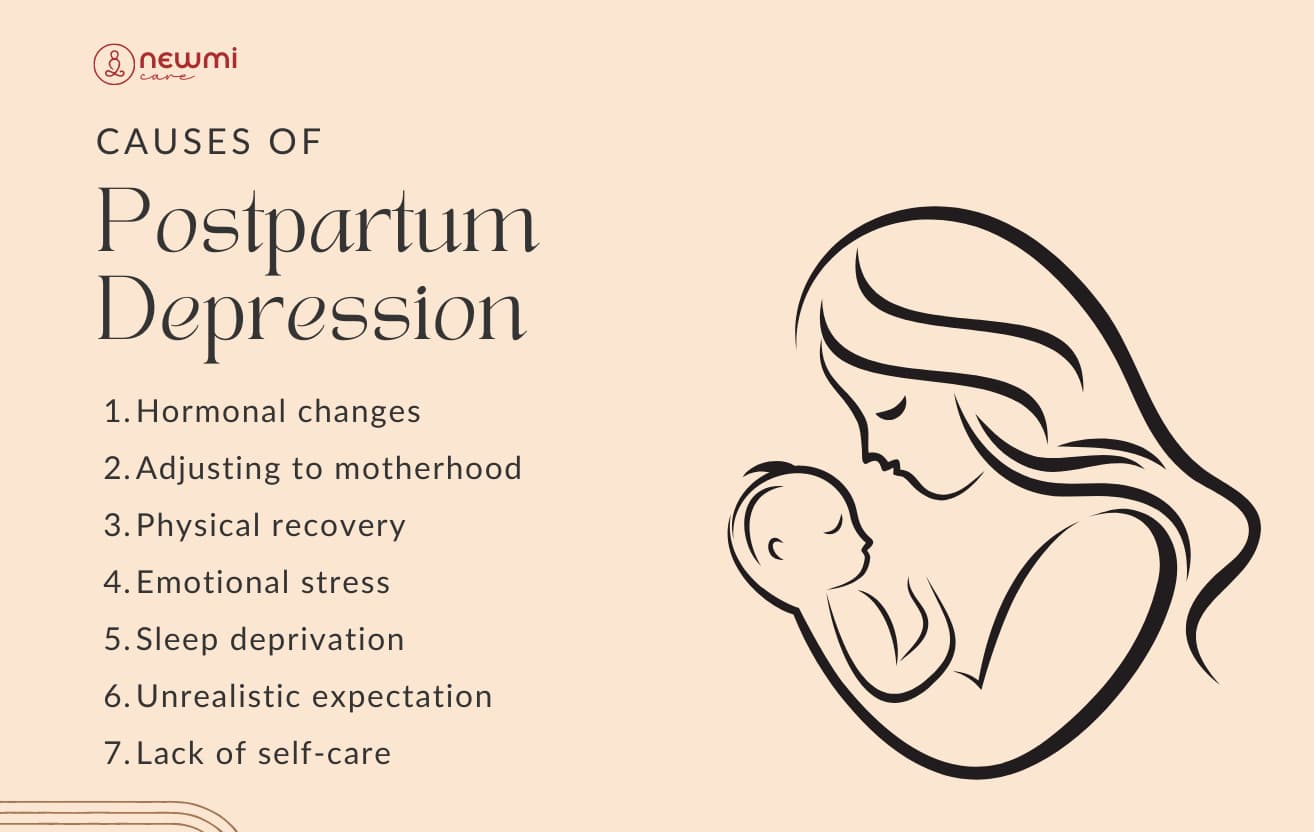
How to Cope Up with Postpartum Depression? (Postpartum Depression Prevention)
Postpartum depression in women is a serious concern and the majority of new mothers experience it at one point or the other. Hence, it is best that women know some crucial steps that will help them in postpartum depression prevention.
Check out these steps and keep post-pregnancy depression at a distance from yourself-- Don’t Ignore Your Feelings
It is very common for new mothers to ignore how they are feeling to take care of their babies. But it is not healthy, and if you keep ignoring it for far too long, you must know that it will take you far too long to get fine again. And you will also miss out on watching your little munchkin grow.
- Prioritize self-care
Make self-care a priority by taking breaks, getting enough rest,eating nutritious meals, engaging in activities you enjoy, setting a routine and practising relaxation techniques such as deep breathing,meditationor postpartum yoga.
- Communicate
Surround yourself with supportive family members, friends, or support groups who can provide emotional support.
And, openly express your emotions and concerns to your partner, loved ones, or amental health therapist. Please note that sharing your experiences can alleviate feelings of isolation and provide opportunities for understanding and support.
- Ask for help
Don’t ever hesitate to ask for help. Burning yourself out to be around your baby and manage the chores is not recommended at all. If you keep exhausting yourself and don’t seek help from your loved one, you might get irritated and burnt out soon.
- Seek professional help
Reach out to a healthcare provider or mental health professional who specializes in postpartum mood disorders. They can provide an accurate diagnosis and recommend appropriate treatment options.
You can also buypostpartum depression managing plans like the one offered by Newmi Care to get a holistic treatment.
In addition, Newmi offers aPostpartum care plan that keeps you and your baby physically and mentally healthy after delivery. (Learn how postpartum recovery plans helps to recover after pregnancy)
Postpartum Depression Home Remedies
Although it is quite crucial to seek the help of a doctor if diagnosed with post-pregnancy depression, there are still some things that you can do at home for improving your condition. Please note that these remedies are not a substitute for medical aid and treatment.
- To improve mental well-being and hormone balance, somepost-pregnancy supplementsor Ayurvedic herbs, includingAshwagandha, Brahmi, andShatavari, can be used.
- Start eating more food with Omega 3 fatty acids a study23198-6/fulltext)has shown that low levels can cause this depression.
- Start meditating and do yoga or mild exercises for improving your mood. (learn thebenefits of doing yoga after pregnancy)
- Connect with the new-mother community to share experiences, and confide in a friend.
Frequently Asked Questions
You might have some more doubts regarding postpartum depression, right? That’s why we have listed down some frequently asked questions along with their answers, have a look-
1. What factors increase my risk of being depressed after the birth of my child?
An individual's or their family's history of depression, past bouts of postpartum depression, stressful life events, a lack of social support, hormonal changes before and after childbirth, and a lack of social support are just a few of the risk factors of postpartum depression.
2. When to see a doctor if suspecting postpartum depression?
The earlier the better. Yes, the day you start feeling like something is off or you are feeling low after delivery, you must see a doctor. Please note that depression just worsens if proper attention is not given, seek help before it’s too late.
3. How Long can postpartum depression last?
It depends on the individual how long postpartum depression lasts. Postpartum depression typically lasts for a few weeks to months if untreated. But many women find that their symptoms improve within a few months with the right care and encouragement. It's crucial to seek professional assistance to have a proper diagnosis and the right care to manage and treat postpartum depression properly.
The Bottom Line
Post pregnancy, a woman experiences many changes that might make her days and nights difficult. Postpartum depression is a reality and is very common. So, don’t dismiss your feelings thinking “It’s all normal, every mother has to go through it”, No, it’s not normal and you must seek help as you are now responsible for the health of another life as well.
_Get in touch with us and explorepostnatal depression management plansnow! Connect with expert mental health consultant and stay mentally fit._